Menopause is a natural phase of life for most women, typically occurring between the ages of 45 and 55. But for some, menopause doesn’t arrive gradually — it’s medically induced. Whether triggered by surgery, chemotherapy, radiation or hormone therapy, medically induced menopause can be a sudden and often jarring experience. For patients navigating this transition, understanding why it happens, what to expect and how to manage symptoms is essential.
Read MoreUse the search box below to search our posted editing and writing clips, or click on a topic in the cloud to see related work.
Lung Cancer Treatment: More Hope Than Ever
/
Lung cancer care is changing quickly. At Sylvester Comprehensive Cancer Center, part of UHealth – University of Miami Health System, new pre-surgical protocols, immunotherapies, and broader screening are directly improving patient outcomes.
Read MoreTeam‑Based Care Makes All the Difference in Multiple Myeloma→
/
The second most-common blood cancer, multiple myeloma is a cancer of plasma cells — part of the immune system — and it often behaves differently from many other cancers. Instead of following a single treatment path, multiple myeloma tends to change over time. Treatments may stop working and need adjustment, and patients often move through periods of remission and relapse — requiring ongoing decisions about when to start treatment, how aggressive it should be and how to manage side effects.
Read MoreSylvester Comprehensive Cancer Center’s Dr. Jashodeep Datta Wins Stanley J. Glaser Award for Pancreatic Cancer Immunotherapy→
/
At Sylvester Comprehensive Cancer Center, part of University of Miami Miller School of Medicine, innovation begins with a question, the kind that sits just beyond what science currently understands. For Jashodeep Datta, M.D., the DiMare Family Endowed Chair in Immunotherapy and associate professor in the Division of Surgical Oncology at the Miller School, those questions have driven a career defined by curiosity, rigor and a deep commitment to improving outcomes for patients with some of the most lethal cancers.
Read MoreWhy Collaborative Care Is Changing What It Means to Live With Multiple Myeloma→
/
Multiple myeloma is the second most-common blood cancer, and it rarely follows a straight path. It evolves over time, responds differently to treatment in each patient and often requires a mix of therapies, including immunotherapies, antibodies, targeted drugs, chemotherapy, CAR T-cell therapy and bone marrow or stem cell transplants.
Read MoreColon Cancer Is Rising in Younger Adults — Use This Prevention Checklist to Reduce Your Risk →
/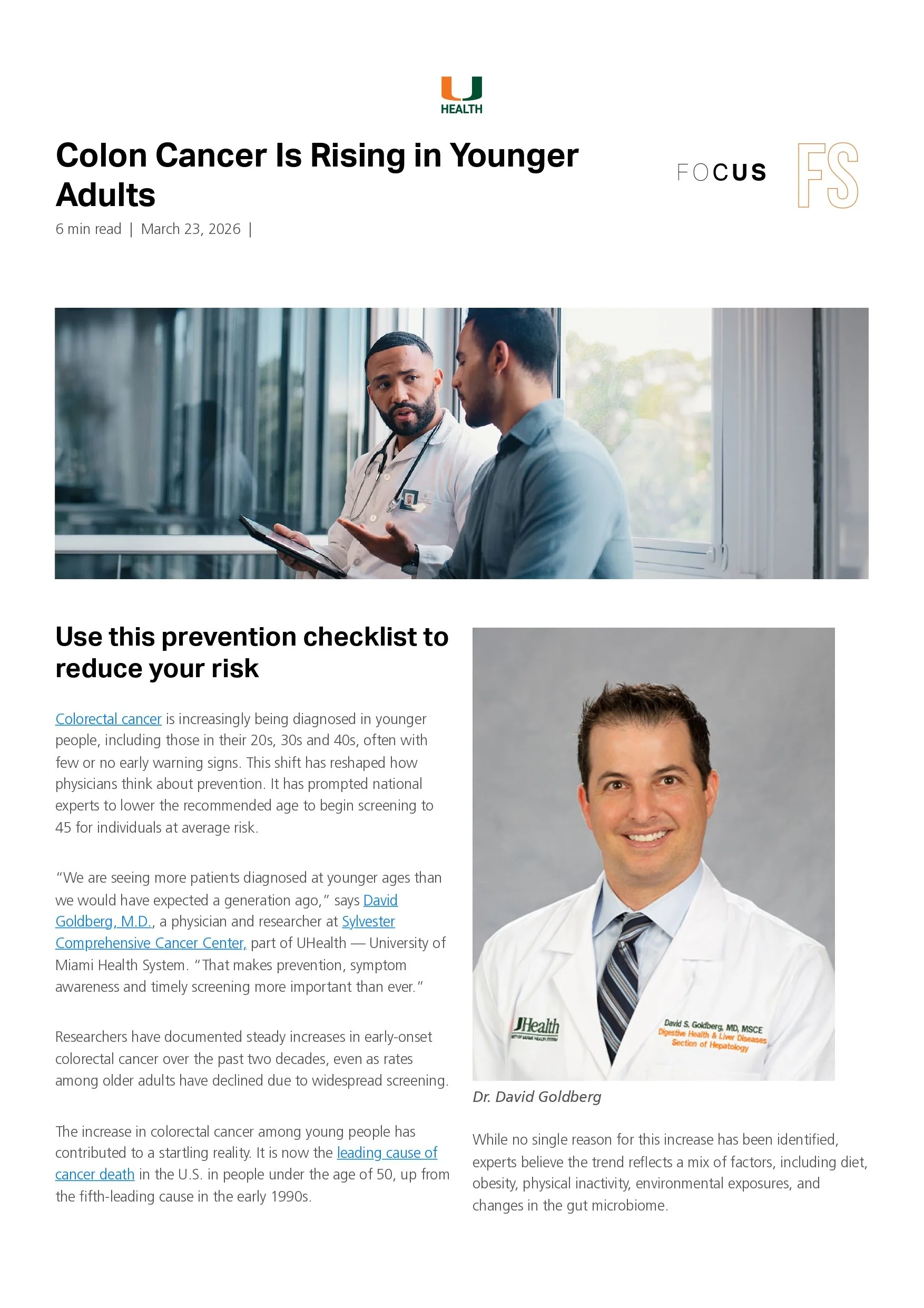
Colorectal cancer is increasingly being diagnosed in younger people, including those in their 20s, 30s and 40s, often with few or no early warning signs. This shift has reshaped how physicians think about prevention. It has prompted national experts to lower the recommended age to begin screening to 45 for individuals at average risk.
Read MoreSylvester Comprehensive Cancer Center Researcher Wins Stanley J. Glaser Award for Colorectal Cancer Immunotherapy→
/
In science, progress rarely moves in a straight line. It advances more like a river—branching, looping back on itself, sometimes disappearing underground before resurfacing with new force. For Kevin Van der Jeught, Ph.D., that winding path has led to a moment of recognition. He received a Stanley J. Glaser Foundation Award, honoring his innovative work in colorectal cancer and immunotherapy.
Read MoreArt is Medicine: A Two-Way Flow of Talent Between Brazil and Miami | InventUM
/
Art is Medicine: A Two-Way Flow of Talent Between Brazil and Miami
Sylvester’s third annual “Art is Medicine” installation opens Nov. 25 and will feature a new collection that highlights nature photography from the Everglades to Brazil, “The Bridge to Bahia.”
Read MoreA New Era in Treating the Chronic Severe Itch of Prurigo Nodularis
/
Until recently, there were no FDA-approved systemic therapies for the severe itch and resultant scratching and nodules of the chronic inflammatory skin disease prurigo nodularis (PN). Thanks to two studies led by a University of Miller School of Medicine researcher, the FDA has now approved the monoclonal antibody dupilumab to bring relief — in many cases, life-changing relief — to PN patients.
Read MoreDr. Estelamari Rodriguez Honored as GRACE Patient Educator of the Year - InventUM
/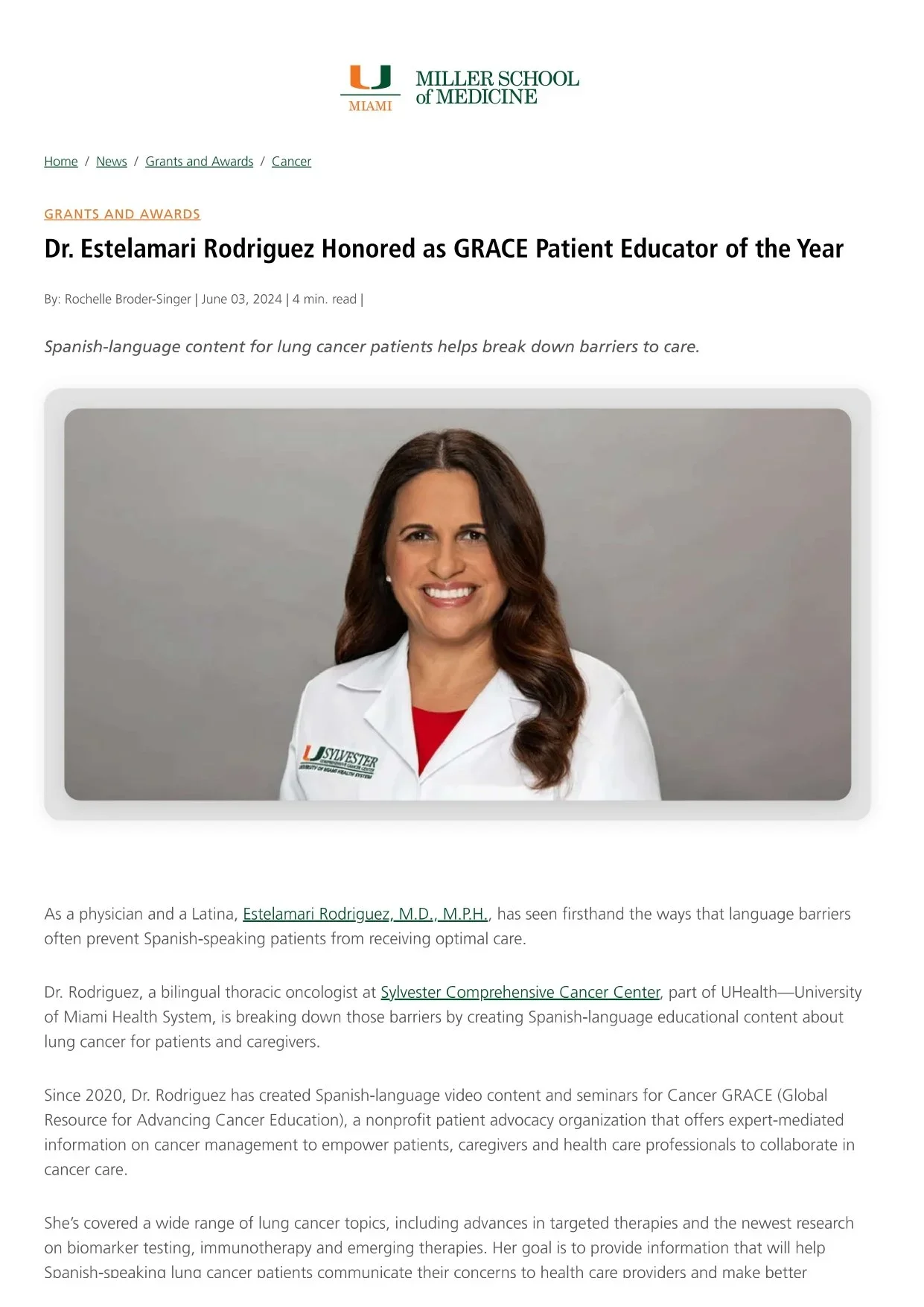
Dr. Rodriguez, a bilingual thoracic oncologist at Sylvester Comprehensive Cancer Center, part of UHealth—University of Miami Health System, is breaking down those barriers by creating Spanish-language educational content about lung cancer for patients and caregivers.
Read MorePost-Pause Speech Patterns Help Detect Mild Cognitive Impairment
/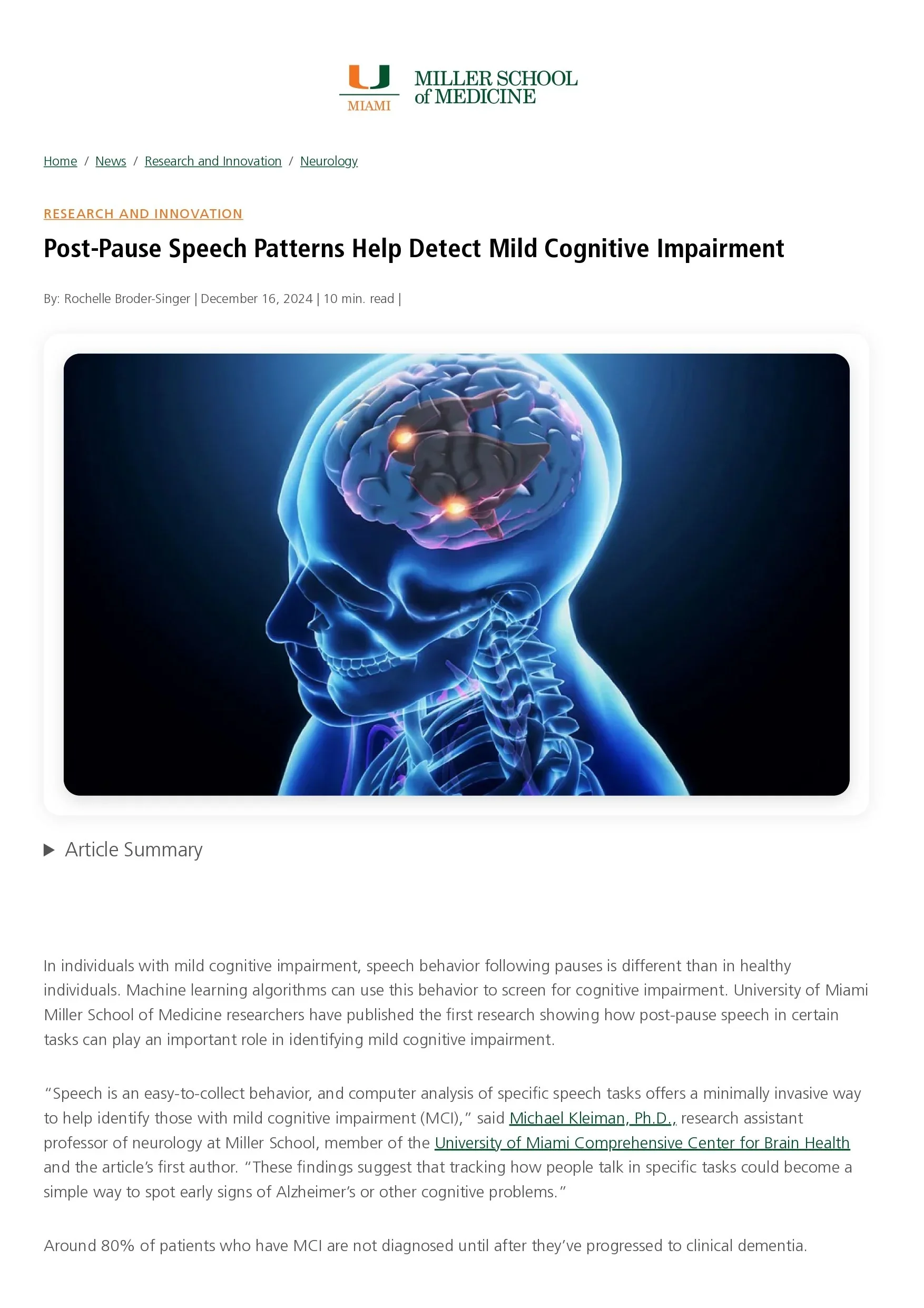
In individuals with mild cognitive impairment, speech behavior following pauses is different than in healthy individuals. Machine learning algorithms can use this behavior to screen for cognitive impairment. University of Miami Miller School of Medicine researchers have published the first research showing how post-pause speech in certain tasks can play an important role in identifying mild cognitive impairment.
Read MorePrurigo Nodularis Treatment Effective in Phase 3 Trial - InventUM
/
Shortly after the FDA approved the first systemic therapy for the chronic severe itch of prurigo nodularis (PN), researchers have demonstrated the effectiveness of a second systemic treatment in a phase 3 clinical trial.
Read MoreWhat Is a Brazilian Butt Lift & How Long Does It Last? | Gentera PSC
/
Women today want to be admired from all angles, and few procedures help more to achieve that alluring profile than the Brazilian Buttock Lift (BBL). We at Gentera Center for Plastic Surgery specialize in the Brazilian Butt Lift surgery, a procedure that builds and accentuates a woman’s curves – or gives nature a little boost in the most strategic areas. It’s the best way to ensure you look good in everything from a teeny bikini to capri slacks or a form-fitting dress.
Read MoreScratching for an Explanation for Psoriatic Itchy Scalp
/
Psoriatic scalp itch may have a larger neural component than previously thought, with neuroimmune mediators — rather than the histamine system — controlling the severity of this type of itch, according to a study led by Miller School of Medicine researchers.
Read More"Conserving Hearing During Inner-Ear Surgery"- An engineering article for the University of Miami College of Engineering
/
By Rochelle Broder-Singer | 01/30/17
A $450,000 grant from the National Institutes of Health (NIH) is helping Suhrud M. Rajguru, an assistant professor in the College of Engineering’s Biomedical Engineering Department and Miller School of Medicine’s Department of Otolaryngology, explore how hypothermia might help preserve residual hearing in patients who undergo cochlear implant surgery.
Read More"New Technique to Reduce Inner-Ear Trauma During Cochlear Implant Surgery"- An engineering article for the University of Miami College of Engineering
/
By Rochelle Broder-Singer | 02/15/17
Not all patients who receive cochlear implants to treat deafness are totally without hearing; many have some residual hearing. But the inner-ear surgery required to implant these life-changing devices can often result in trauma that causes loss of that residual hearing. Suhrud M.
Read More