What You Might Not Know About Your Breast Cancer Risk

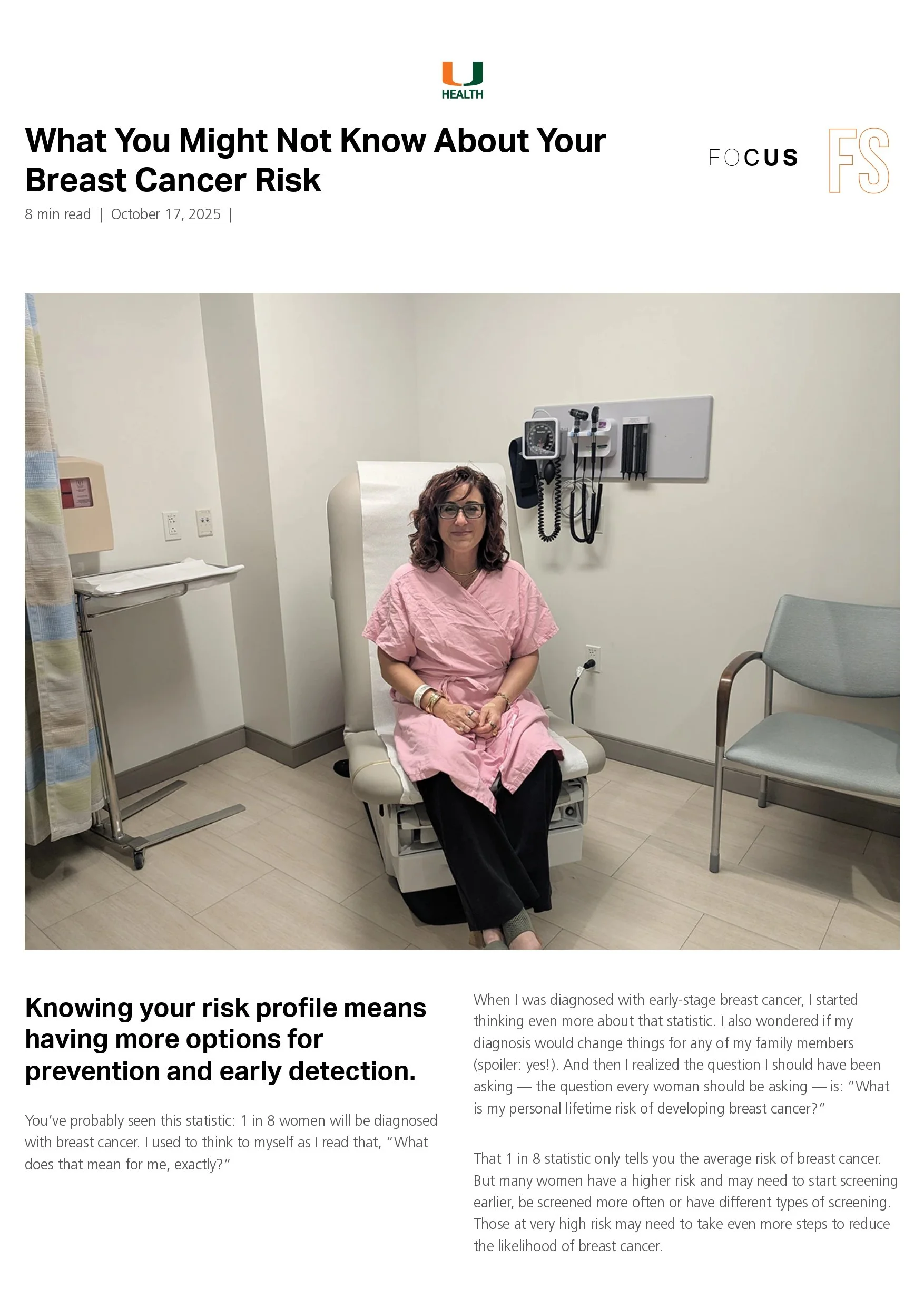
What You Might Not Know About Your Breast Cancer Risk

Rochelle highlights that breast cancer risk is not the same for every woman, and understanding your personal risk profile is key to early detection and prevention.

While general statistics offer a broad picture, individual risk is shaped by factors such as family history, genetics, lifestyle and overall health.

She encourages open conversations with healthcare professionals and proactive assessment from an early age, as knowing your risk can lead to more tailored screening, informed choices and greater control over your health.

Read More

How to Move Forward From Cancer Diagnosis Day

How to Move Forward From Cancer Diagnosis Day

Rochelle shares the emotional reality of cancer diagnosis day, recognising how overwhelming it can feel as fear, uncertainty and information arrive all at once. She highlights the importance of reaching out to trusted people for support, asking questions and taking time to understand the diagnosis and treatment options. By seeking expert opinions, focusing on one step at a time and building a strong support network, individuals can begin to move forward with greater clarity and confidence, even in the earliest stages of their journey.

Read More

Should I Get Genetic Testing for Cancer Risks?

Should I Get Genetic Testing for Cancer Risks?

Genetic testing for cancer risk looks for inherited gene changes that may increase the likelihood of developing certain cancers. While only a small percentage of cancers are hereditary, testing can provide valuable insight for those with a personal or family history, helping guide earlier screening, prevention strategies and personalised care.

However, results do not guarantee whether someone will or will not develop cancer, and regular screening remains essential regardless of genetic findings.

Understanding individual risk and discussing options with a healthcare professional can help people make informed decisions about whether genetic testing is right for them.

Read More

Team‑Based Care Makes All the Difference in Multiple Myeloma

Team‑Based Care Makes All the Difference in Multiple Myeloma

The second most-common blood cancer, multiple myeloma is a cancer of plasma cells — part of the immune system — and it often behaves differently from many other cancers. Instead of following a single treatment path, multiple myeloma tends to change over time. Treatments may stop working and need adjustment, and patients often move through periods of remission and relapse — requiring ongoing decisions about when to start treatment, how aggressive it should be and how to manage side effects.

Read More

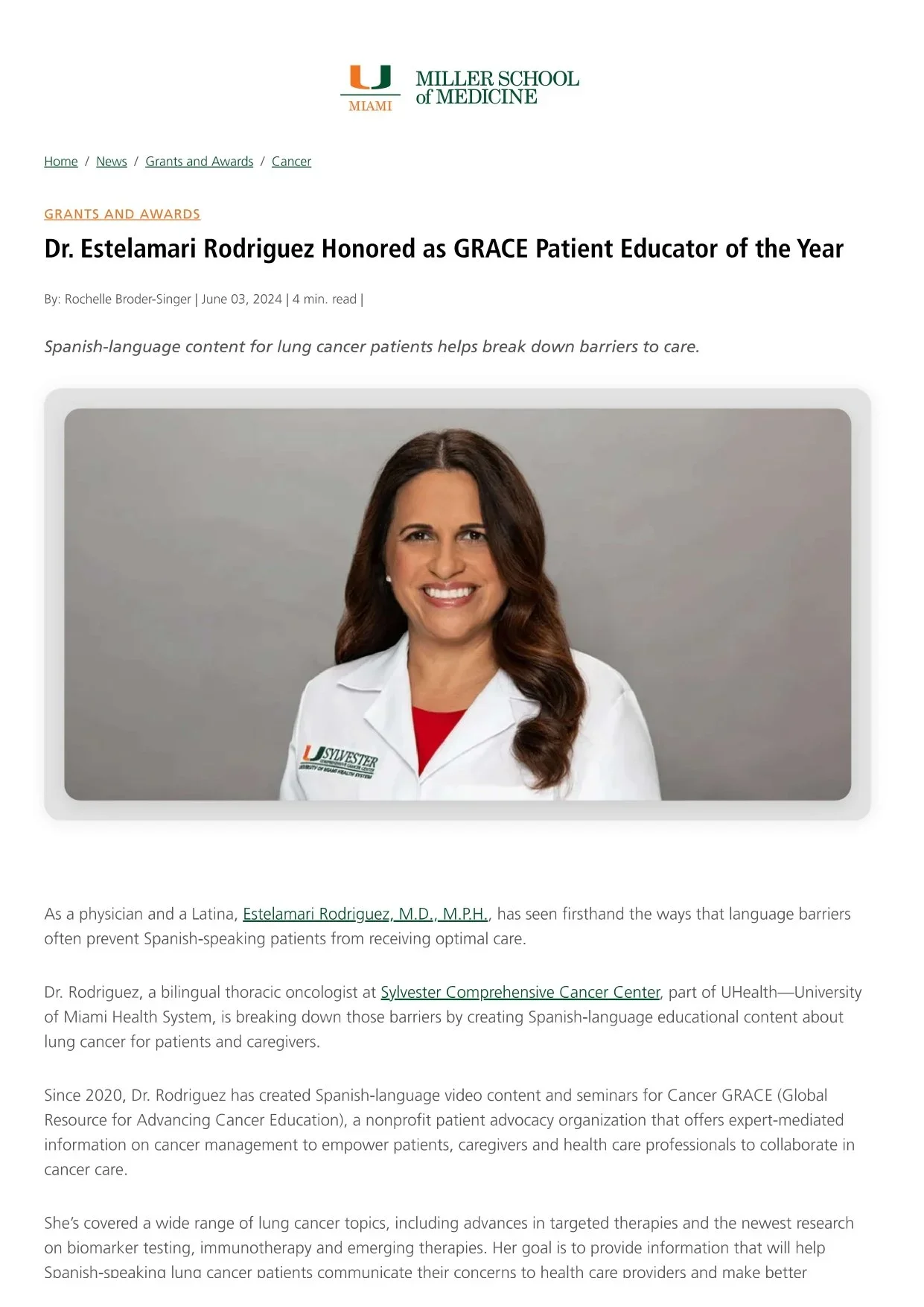
Sylvester Comprehensive Cancer Center’s Dr. Jashodeep Datta Wins Stanley J. Glaser Award for Pancreatic Cancer Immunotherapy

Sylvester Comprehensive Cancer Center’s Dr. Jashodeep Datta Wins Stanley J. Glaser Award for Pancreatic Cancer Immunotherapy

At Sylvester Comprehensive Cancer Center, part of University of Miami Miller School of Medicine, innovation begins with a question, the kind that sits just beyond what science currently understands. For Jashodeep Datta, M.D., the DiMare Family Endowed Chair in Immunotherapy and associate professor in the Division of Surgical Oncology at the Miller School, those questions have driven a career defined by curiosity, rigor and a deep commitment to improving outcomes for patients with some of the most lethal cancers.

Read More

Why Collaborative Care Is Changing What It Means to Live With Multiple Myeloma

Why Collaborative Care Is Changing What It Means to Live With Multiple Myeloma

Multiple myeloma is the second most-common blood cancer, and it rarely follows a straight path. It evolves over time, responds differently to treatment in each patient and often requires a mix of therapies, including immunotherapies, antibodies, targeted drugs, chemotherapy, CAR T-cell therapy and bone marrow or stem cell transplants.

Read More

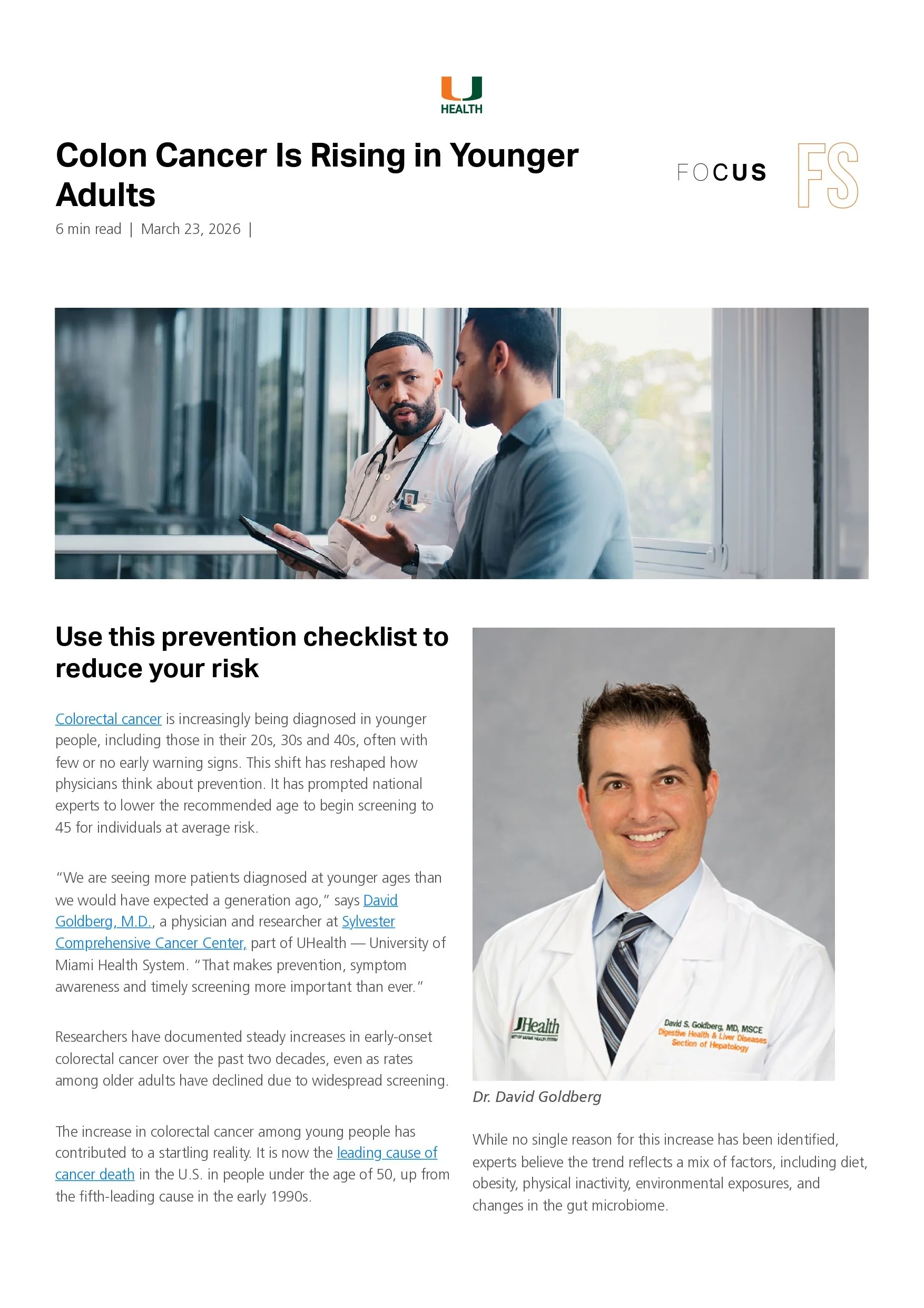
Colon Cancer Is Rising in Younger Adults — Use This Prevention Checklist to Reduce Your Risk

Colon Cancer Is Rising in Younger Adults — Use This Prevention Checklist to Reduce Your Risk

Colorectal cancer is increasingly being diagnosed in younger people, including those in their 20s, 30s and 40s, often with few or no early warning signs. This shift has reshaped how physicians think about prevention. It has prompted national experts to lower the recommended age to begin screening to 45 for individuals at average risk.

Read More

Sylvester Comprehensive Cancer Center Researcher Wins Stanley J. Glaser Award for Colorectal Cancer Immunotherapy

Sylvester Comprehensive Cancer Center Researcher Wins Stanley J. Glaser Award for Colorectal Cancer Immunotherapy

In science, progress rarely moves in a straight line. It advances more like a river—branching, looping back on itself, sometimes disappearing underground before resurfacing with new force. For Kevin Van der Jeught, Ph.D., that winding path has led to a moment of recognition. He received a Stanley J. Glaser Foundation Award, honoring his innovative work in colorectal cancer and immunotherapy.

Read More

A New Era in Treating the Chronic Severe Itch of Prurigo Nodularis

A New Era in Treating the Chronic Severe Itch of Prurigo Nodularis

Until recently, there were no FDA-approved systemic therapies for the severe itch and resultant scratching and nodules of the chronic inflammatory skin disease prurigo nodularis (PN). Thanks to two studies led by a University of Miller School of Medicine researcher, the FDA has now approved the monoclonal antibody dupilumab to bring relief — in many cases, life-changing relief — to PN patients.

Read More

Executive Search Case Study: Chief Compliance and Privacy Officer for a Growing Privately Held For-Profit Healthcare Operator | Barker Gilmore

Executive Search Case Study: Chief Compliance and Privacy Officer for a Growing Privately Held For-Profit Healthcare Operator | Barker Gilmore

The client is a prominent, for-profit health services company operating hospitals and healthcare facilities across the United States. With more than 23,000 employees and annual revenues exceeding $5 billion, the company has a strong history of rapid growth through mergers and acquisitions. As it prepared for another significant growth phase, the long-serving Chief Compliance Officer (CCO), who had been a crucial part of the leadership team for 21 years, announced plans to retire. This development initiated the search for a new Chief Compliance and Privacy Officer.

Read More

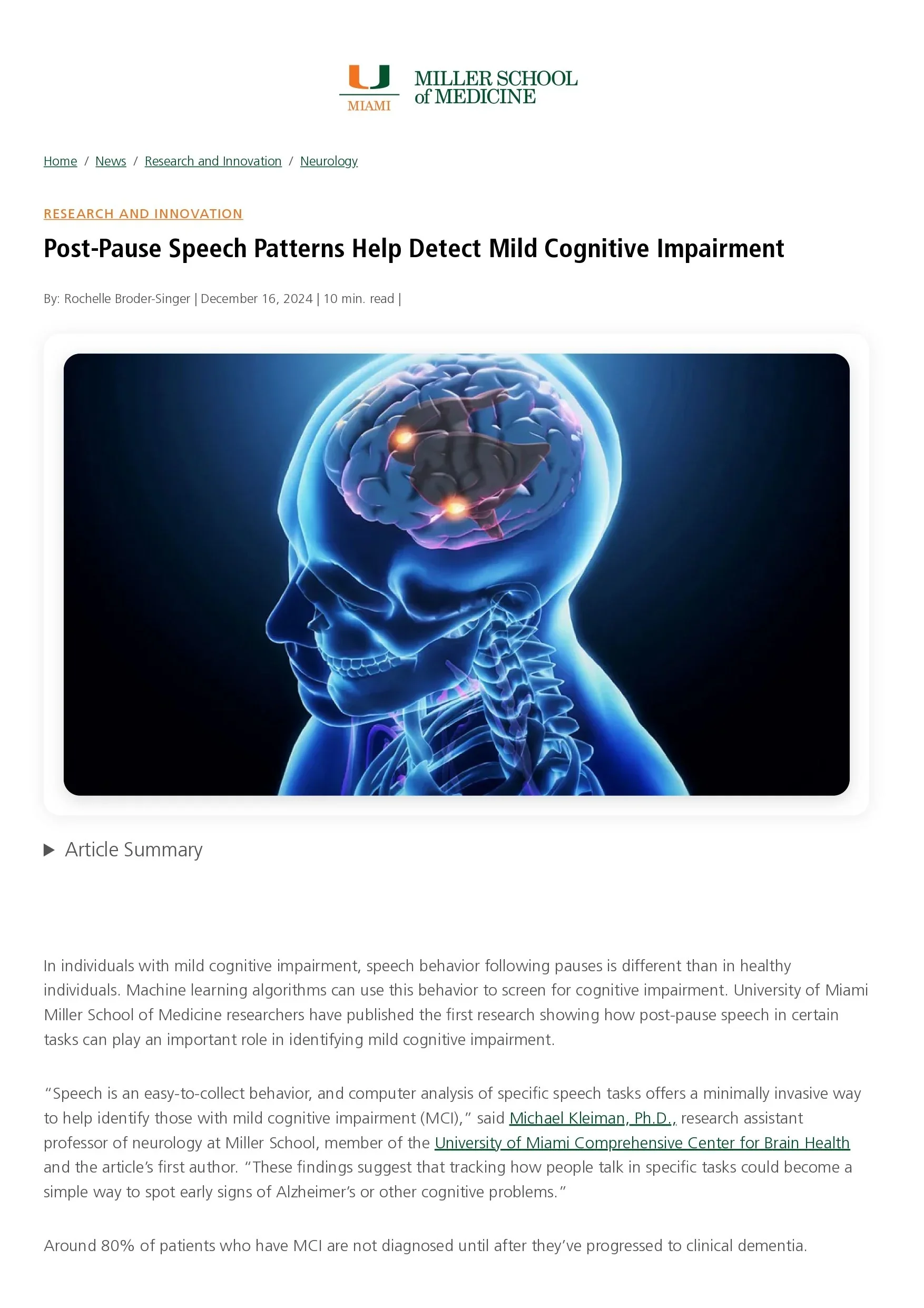
Post-Pause Speech Patterns Help Detect Mild Cognitive Impairment

Post-Pause Speech Patterns Help Detect Mild Cognitive Impairment

In individuals with mild cognitive impairment, speech behavior following pauses is different than in healthy individuals. Machine learning algorithms can use this behavior to screen for cognitive impairment. University of Miami Miller School of Medicine researchers have published the first research showing how post-pause speech in certain tasks can play an important role in identifying mild cognitive impairment.

Read More